




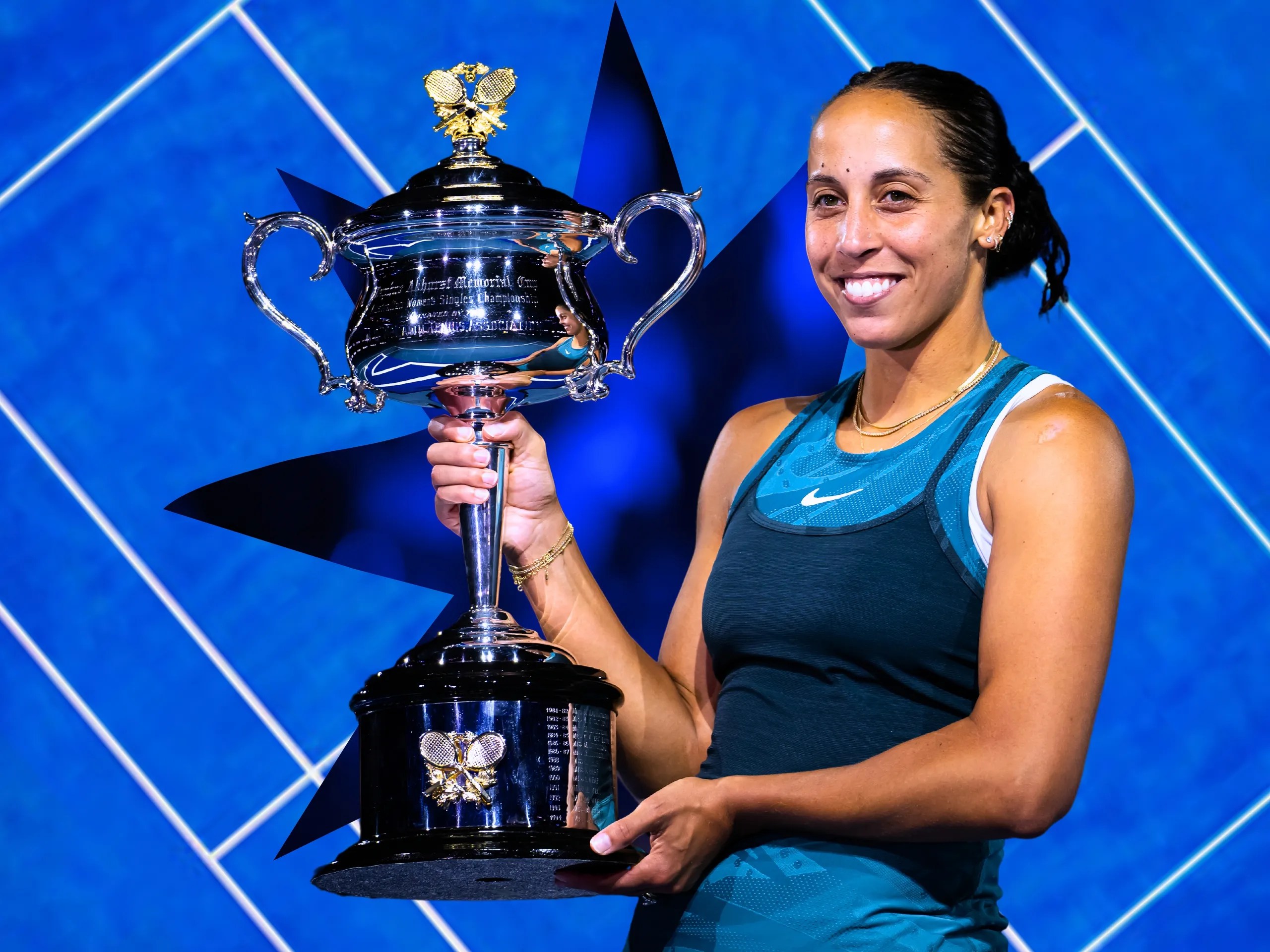
Where does Madison Keys’ run stand amongst history? Let’s look into how amazing this run was…
Just off the eye test, you could tell how well Madison Keys was playing to begin the year. Her ball striking ability was clear, but the footwork and mental stability was showing. In three tournaments played this season (Auckland, Adelaide, Australian Open) she’s 14-1 with her only loss coming to one of the most in form players at this time in Clara Tauson. Even in that loss, 6-4 7(9)-6, Madison served for the second set, showing the slight edge she found during the middle of the match. After the match, she made her way over to Brisbane to begin a 12-match winning streak in Australia which will carry into 2026 ;). While there are countless reasons why this run was so impressive, Madi came back from a set down 4 times, including the Semi-Final and Quarterfinal at the Australian Open. What that tells me is how much her fitness has improved since the fall and all of the work she put in over the off season. It’s clear how hungry she was to start the year on the right foot on the hard courts in Australia. A surface that is perfect for her.
Keys is known for her aggressive play style with a huge serve and powerful groundstrokes standing at 5’10. She plays close to the baseline, with an attack minded strategy, playing the lines aggressively. Behind the powerful Keys serve, her plus 1 is the most important shot, often allowing for shorter points to gain rhythm on serve.
At WTA Brisbane, the week before the Australian Open, Keys got hot taking down notable hard court opponents in Haddad-Maia, Ostapenko, Kasatkina and Samsonova. Keys delivered an outstanding performance in the final, defeating Jess Pegula 6-3, 4-6, 6-1 in the final with her signature powerful game. The 29-year-old showcased her dominance by firing 36 winners and 10 aces, securing her ninth career title.
The Australian Open Run
While there’s so much I want to touch on, let’s just talk about the run she went on to win this tournament. She defeated in order Danielle Collins(#11), Elena Rybankina(#6), Elena Svitolina(#28), Iga Swiatek (#2) and world number 1 Aryna Sabalenbka. I mean is that not INSANITY?! I want to focus on Keys taking down our WTA Big 3 in Sabalenka, Swiatek and Rybankina, but you add two amazing hardcourters in Collins and Svitolina and I’m left starstruck.
Riding the wave from Brisane, Keys set out with a fairly easy start to the draw as she defeated Ann Li in straight sets 6-4 7-5 and Elena Ruse 7-6 2-6 7-5. I think it’s fair to say there’s always nerves to start a Major tournament so the extra lifting in rounds 1 and 2 felt normal. Look, Sinner went to two tiebreaks in R1 vs Jarry, and then went on to play 2 breakers the rest of the tournament (20 sets). Then the going got a bit tougher as she played a familiar face in fellow American Danielle Collins. She faced just 2 break points all match and managed to be on the frontfoot in most rallies.
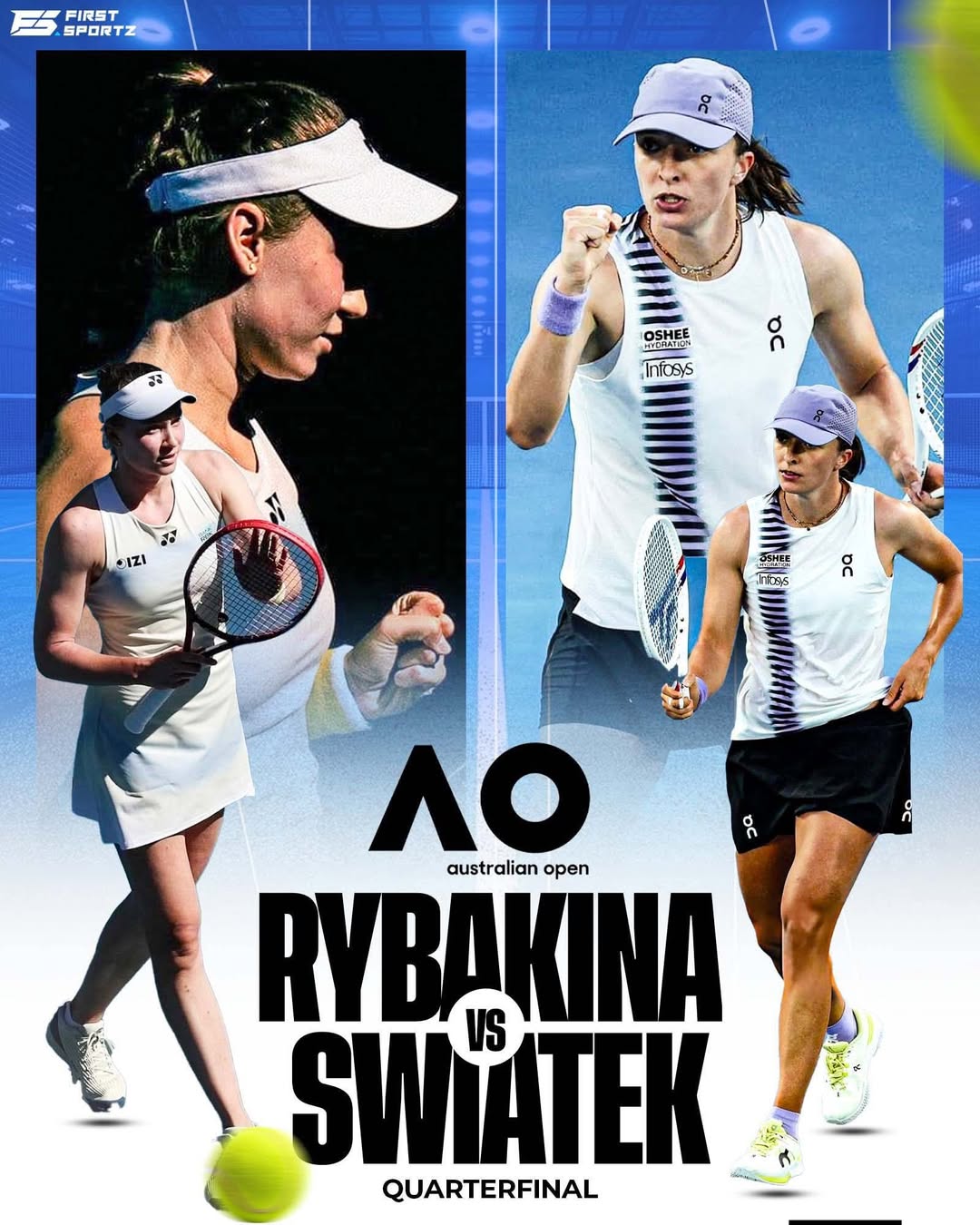
Then came her next match against Elena Rybakina which I think was most pivotal in the title run. Rybakina was open about some back issues prior to the match as well as her coaching saga, so the opportunity to pounce became evident. Despite these issues, Rybankina on a hard court with her talent will never be straightforward. The story of the match was the reality that Rybankina couldnt consistently absorb power from the back of the court. Keys was relentless with her ball striking, minimizing the time for Rybankina, putting her in uncomfortable positions. The first set was a fight, but Keys prevailed winning multiple pressure points, diminishing the confidence of Rybankina. But the second set was a different story…Ryabkina raced out to an early break before putting too much pressure on the Keys serve leading to erratic groundstrokes. By the middle of the second set it was time to put the set to bed and prep for a third set. The first game of the third set was Monster for Keys, hanging tough in rallies and fighting off 4 breakpoints, eventually holding for 1-0. The 2nd game was a perfect time to attack the Rybankina serve and despite being down 0-30, she fought back to win 4 straight points and grab the early break. The mental got heavy for Rybankina, but she was able to break back in the middle of the set for 3-3. Keys mentally composed herself after getting broken in the third, immediately breaking back and holding for 5-3. Towards the end of the match Keys started to read the Rybakina serve very well and created very impressive returns. She did enough to put pressure on Rybankina serving to stay in the match, eventually converting her second Match point.
Keys’ match with Svitolina felt fairly casual despite Keys dropping the first set. She went on to face just one break point the rest of the match, saving it in the first game of the second set. The hold would give her the momentum she needed to run through the finish line. Svitolina was a difficult match for Keys because of how much depth she hits with. Since Keys likes to crowd the baseline, she was looking to dictate early as opposed to getting pushed back from the heaviness and depth of Svitolina’s groundstrokes. Svitolina did well in the first half of the match on return, as she read it well looking to play strike first tennis. But it was Keys who looked to be the aggressor come the second set, converting 10 of 12 net points. I think that aggression allowed her to play more freely as well, smashing 49 total winners in the match. Keys said “I think in the second set I really just started trying to get to the net a lot more and really kind of take advantage of some of the short balls that I was getting. Just being able to do that, I feel like I kind of ran with the momentum after that.”
The match versus Iga Swiatek was a whirlwind. The good news for Keys was the reality that she is one of the worst matchups for Iga because she has the ability to rush any opponent. With the big and flat ball striking from the back of the court, Iga doesn’t have as much time on the ball, diminishing her chances to dictate and control the court, keeping players on the move as consistently as she can. Similar to Sabalenka, Keys’ game on hard courts has the ability to trouble anyone. The first set was a feeling out process, with break points popping up in each service game. Serving to stay in the set, Keys squandered a routine bounce smash from close range but quickly regrouped to hold for 5-5. However, Swiatek tightened up her game, eliminating errors, holding serve, and then breaking with a strong return to secure the set.
It seemed like a turning point for Swiatek to take control, but Keys had different plans. Unleashing aggressive returns, she hammered a series of winners, breaking twice to surge ahead 3-0 in the second set as Swiatek’s groundstrokes faltered. Keys fired three consecutive aces in her next service game, then broke Swiatek once more to extend her lead to 5-0. Although the No. 2 seed managed to avoid a bagel by breaking back, Keys stayed on the offensive and capitalized on another break to close out the set in dominant fashion.
As the third set began, both players engaged in an intense battle exchanging holds for 3 all. They fought off break points to stay on serve until 4-4, with Swiatek escaping a tight spot at 3-4, 15-40, and Keys digging herself out of a 0-40 hole in the next game. Swiatek appeared to have the upper hand when she broke for 6-5 and reached match point, but a tense backhand error allowed Keys to break back and force a tiebreak. Once again, Swiatek edged ahead, leading 7-5 and then 8-7 with a superb volley, but Keys responded emphatically, winning three consecutive points to seal the victory as Swiatek’s final forehand sailed long. Keys trailed 4-1 in the H2H vs Swiatek coming into the match, with her sole winning coming in 2022 in Cincinnati. A fitting place to win, on home soil with fast, low bouncing conditions that suit her well, similar to Australia.
The final against Sabalenka was highly anticipated, given their similar playing styles and power-driven approach to the game. Heading into the match, Sabalenka led the H2H 4-1, with Keys’ only win coming in the Berlin Final 2021 on the grass, another surface that fits her game very well. I remember the 2023 US Open Semi-Final being a battle between these two, in which Sabalenka won via tiebreaks in sets 2 and 3.
Title Time!
Madison Keys dominated the first set against Aryna Sabalenka, breaking the world No. 1’s serve in the opening game and quickly building a commanding lead. She secured a double break at 4-1, capitalizing on Sabalenka’s errors, including multiple double faults. Though Sabalenka briefly fought back with a break of her own at 5-3, Keys maintained her composure and sealed the set with a decisive backhand winner after Sabalenka’s fourth double fault. Playing with confidence and precision, Keys outmaneuvered her opponent to take the set 6-3.
Sabalenka responded strongly in the second set, gradually taking control with more consistent serving and aggressive shot-making. After a tense opening exchange, she secured the first break at 2-1 and never looked back, dictating rallies and capitalizing on Keys’ dip in first-serve percentage. A second break at 4-1 further tilted momentum in her favor, and despite a brief stumble while serving at 5-2, she closed out the set as Keys sent a shot long. With the reigning champion finding her rhythm and using her slice and drop shots effectively, the match headed into a deciding set.
In a tense and high-quality final set, Madison Keys held her nerve to claim her first Grand Slam title. Both players traded strong service games early, with neither conceding a break through the first ten games. Keys showed resilience, saving break points and responding to Sabalenka’s aggressive play with powerful forehands and clutch serving. At 5-5, Keys held firm before applying pressure on the world No. 1’s final service game. She capitalized on Sabalenka’s errors to earn two championship points and finally, Keys seized her opportunity, delivering a forehand winner—a recurring weapon throughout the match—on her second championship point to secure victory.
Reflection
The last time Madison Keys competed in a Grand Slam final was at the 2017 US Open, where she suffered a crushing 6-3, 6-0 defeat to Sloane Stephens. Reflecting on that match, Keys admitted, “I was so consumed with being nervous, the moment, and the opportunity that I never really gave myself a chance to actually play.” On Saturday, January 25th at Rod Laver Arena, she appeared far more composed. Playing with controlled aggression, she maintained emotional balance and kept her game sharp, closing out the first set with more winners than unforced errors.
Madison Keys’ journey has been nothing short of inspiring. Once hailed as the next big star, the 29-year-old faced setbacks—forgotten, overlooked, unlucky, and injured. But instead of letting adversity define her, she looked inward and asked herself: Do I need this to validate who I am? That shift in mindset led to major changes in the offseason, including new polyester strings, a lighter Yonex racquet, and a simplified service motion—adjustments that paid off, as she fired six aces and recorded zero double faults in the final.
Her victory is more than just a Grand Slam title—it’s a triumph of character. Freeing herself from external expectations, she rediscovered her love for the game with the support of her coach and husband, Bjorn Fratangelo, as well as therapy. In the thrilling third set against Sabalenka, she showcased resilience, power, and mental strength, proving that what she truly needed wasn’t a trophy, but a sense of self. In the end, she gained both, and it was a joy to watch her rise to the moment.
Keys leaves Australia with a WTA ranking of world No. 7, matching the career high she first achieved in 2016.
Where does this run stand in history?
For Madison Keys, Five of her seven victories—including her last four—were hard-fought, going the distance in three sets. She became just the third player in the Open Era to win five three-set matches on the way to a Grand Slam title and the fourth to defeat four Top 10 seeds en route to a major championship.
Having won the title in Adelaide, she’s the first woman to win a lead-up event the week before a major and then go on to win that major since Barbora Krejcikova at Roland Garros in 2021.
Since WTA rankings began in 1975, she’s just the 10th woman to defeat both the world No. 1 and the world No. 2 at a Grand Slam event. She’s the first woman to do it at the Australian Open since Serena in 2005, and the first woman to do it at any major since Svetlana Kuznetsova at 2009 Roland Garros.
She’s the first No. 19-seeded woman to win a Grand Slam title in the Open Era. No. 19 was one of three Top 20 seeds yet to win one—we’re still waiting for No. 16 and No. 18…
Best title runs (Women)
- Serena Williams’ debut (U.S. Open)
Williams’ run stands as one of the most remarkable in tennis history. On her path to a first Grand Slam title, she defeated a teenage Kim Clijsters, followed by Conchita Martínez, Monica Seles, Lindsay Davenport, and Martina Hingis—five Grand Slam champions—solidifying her arrival on the sport’s biggest stage.
- Steffi Graf (1988 Golden Slam, won all 4 majors + Olympics in same year)
No one has matched Graf’s feat of winning all four Grand Slams and an Olympic gold medal in the same year. Her dominance in 1988, including a 6-0, 6-0 demolition of Natasha Zvereva in the French Open final, is legendary.
- Monica Seles – (1991 Australian Open)
At just 17 years old, Seles won the Australian Open without dropping a set, defeating Jana Novotna, Mary Joe Fernández, and Steffi Graf along the way.
- Iga Świątek (2020 French Open)
Świątek’s 2020 French Open run was pure dominance. She didn’t drop a single set and became the lowest-ranked woman (No. 54) to win Roland Garros.
Best title runs (Men)
- Rafael Nadal – (2008 French Open)
Nadal’s 2008 French Open run is considered one of the most dominant in history. He didn’t drop a single set and crushed world No. 1 Roger Federer 6-1, 6-3, 6-0 in the final, handing Federer his worst Grand Slam defeat.
- Roger Federer – (2006 Wimbledon)
Federer’s 2006 Wimbledon campaign was near perfection. He dropped only one set the entire tournament—to Rafael Nadal in the final—before securing his fourth straight Wimbledon title with a 6-0 fifth set.
I understand this article got long, but I think it’s deserving. Madison Keys’ 2025 Australian Open run goes down as one of the best in all of tennis history!
Until Next time…
Simon
Simon-
Very well written with both intellect and insights. As always we appreciate your humor and knowledge. Thank u
Sent from my iPad