




Just eight months ago, Frances Tiafoe found himself at a crossroads.
Following a disappointing stretch of results, Tiafoe parted ways with coach David Witt in October 2025 after more than a year together. The partnership had produced flashes of success, but not the week-to-week consistency that many expected from one of the game’s most naturally gifted athletes. As his ranking slipped and early exits became more common, questions began to surface about where his career was headed.
Today, those questions feel much quieter.
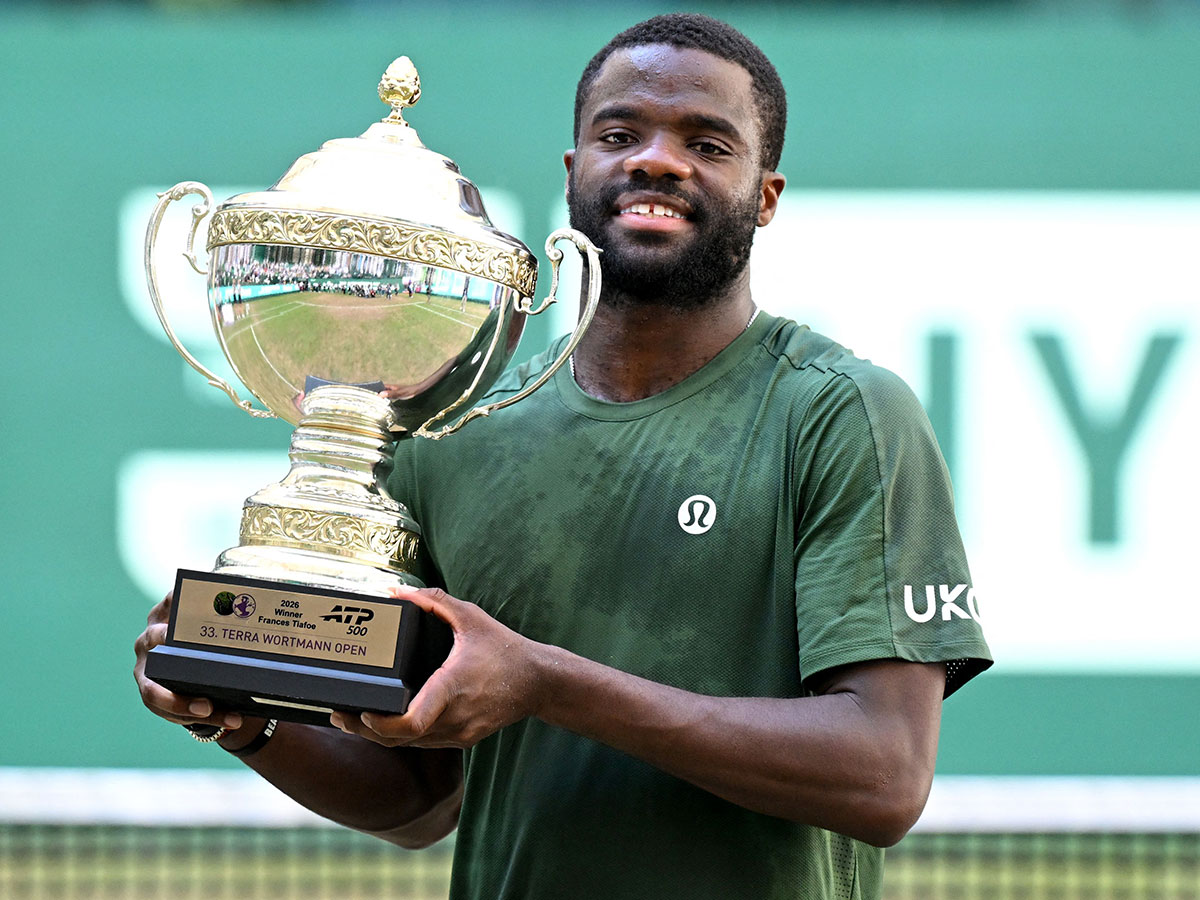
A fourth round run at Roland Garros followed by a title at Halle has reignited Tiafoe’s season and put him back in a position that once seemed unlikely. More importantly, it feels like this resurgence is built on more than a hot couple of weeks. It feels like the product of a player who has reset both mentally and physically at exactly the right time. That timing could make all the difference.
Frances Tiafoe’s resurgence wasn’t about rebuilding his forehand or backhand. It was about becoming the best version of the player he had always been.
One of the most significant changes came with the addition of renowned sports scientist Dr. Mark Kovacs. Rather than approaching Tiafoe’s game with the goal of making dramatic technical changes, Kovacs’ philosophy was far more measured. At 28 years old, Tiafoe didn’t need to become a different player.
According to Kovacs, the emphasis shifted toward health, fitness, recovery, daily habits, and maximizing every aspect of Tiafoe’s preparation. The objective wasn’t to rebuild his game from the ground up, but to remove the inconsistencies that had prevented his talent from showing up week after week.
Perhaps the most revealing part of Kovacs’ philosophy wasn’t about tennis at all. He explained that Tiafoe had committed himself to “doing the boring stuff consistently” the practice plans, recovery routines, fitness work, and daily habits that rarely make highlight reels but often separate the good players from the great ones.
Fans tend to remember the spectacular moments: the acrobatic gets, the booming serves, and the celebrations after championship points. Coaches often see something different. They notice whether players commit to the same preparation every single day, whether they recover properly and if they maintain discipline even when the cameras aren’t rolling. Those habits, more than any single technical adjustment, appear to have become the foundation of Tiafoe’s resurgence.
The first real signs emerged on the clay courts of Roland Garros. Clay has never been considered Tiafoe’s best surface, making his run all the more encouraging. He looked physically fresh deep into the tournament, trusted his movement, and competed with a level of discipline that had occasionally been missing during previous stretches of his career. By the time the tour arrived on grass, his confidence had already begun to build.
Halle wasn’t the beginning of the resurgence, but it was confirmation. I can say I was one who saw this opportunity for Tiafoe and believed it.
The timing couldn’t be much better. While Jannik Sinner and Carlos Alcaraz have separated themselves at the top of the ATP Tour, the race behind them remains remarkably fluid. Rankings can change quickly, and one sustained stretch of high-level tennis can completely reshape a season. With Wimbledon followed by the North American hard-court swing, historically one of Tiafoe’s strongest periods of the calendar, the opportunity to climb back toward the Top 10 feels very real.
Wimbledon offers an immediate measuring stick. Rather than simply carrying confidence from Halle, Tiafoe now has a genuine opportunity to capitalize on it. His section of the draw is competitive, featuring players such as Taylor Fritz, Alexander Bublik, and Sascha Zverev, but there should be nothing for Tiafoe to fear. If Tiafoe maintains the form that carried him through Paris and Halle, there’s every reason to believe he can emerge as the favorite to reach the semifinals from his quarter.
At 28 years old, Tiafoe isn’t a young prospect anymore, but he is hardly past his prime. His game has always possessed the weapons necessary to compete with anyone on tour when his confidence is high. The challenge has never been reaching that level, it has been sustaining it.
That’s why this resurgence feels different. It doesn’t appear to be built solely on confidence or momentum, but on a stronger foundation of preparation, recovery, fitness, and discipline. Those are the kinds of improvements that accumulate quietly over months before finally revealing themselves in the results.
Talent was never Frances Tiafoe’s question. If the past several months are any indication, he may finally be building the foundation that allows his talent to show up week after week. This time, Frances Tiafoe isn’t climbing the rankings because he discovered something new.
He’s climbing because he’s finally maximizing what was there all along.
Discover more from Simonsaystennis.com
Subscribe to get the latest posts sent to your email.

Hard work always pays off.
wonderful analysis and very thoughtful – thank u